I've been running on and off for most of my concious life, but it only became a real habit during COVID. Gyms were closed, the streets were empty, and running was one of the few things you could still do outside without breaking any rules. So I ran. A lot, and often.

That was long before the current running club boom, loooong before every second coffee shop started hosting a Saturday 5K. And through all those years, there was always some piece of tech on my body counting the kilometres. This is the story of those devices: what each one got right, what I loved, what I hated, and where I've ended up.
Part 1: The Apple Watch years
For most of that time I ran with an Apple Watch, and later with an Apple Watch Ultra.
Every keynote, Apple tells us how much better the Workout app has become. And every year it stays surprisingly basic and more or less the same. There's almost no customisation, you get a handful of standard numbers, and there are no maps. The same goes for pretty much every other sport it supports. For a device marketed so heavily at athletes, the built-in experience feels like an afterthought.
There is an alternative though: WorkOutDoors. If you run with an Apple Watch, I can't recommend it enough.
It gives you fully customizable data screens, real OSM maps, route navigation, interval schedules, turn-by-turn directions and alrts, and even supports sensors. It's a one-time purchase, and it's what the Workout app should have been.
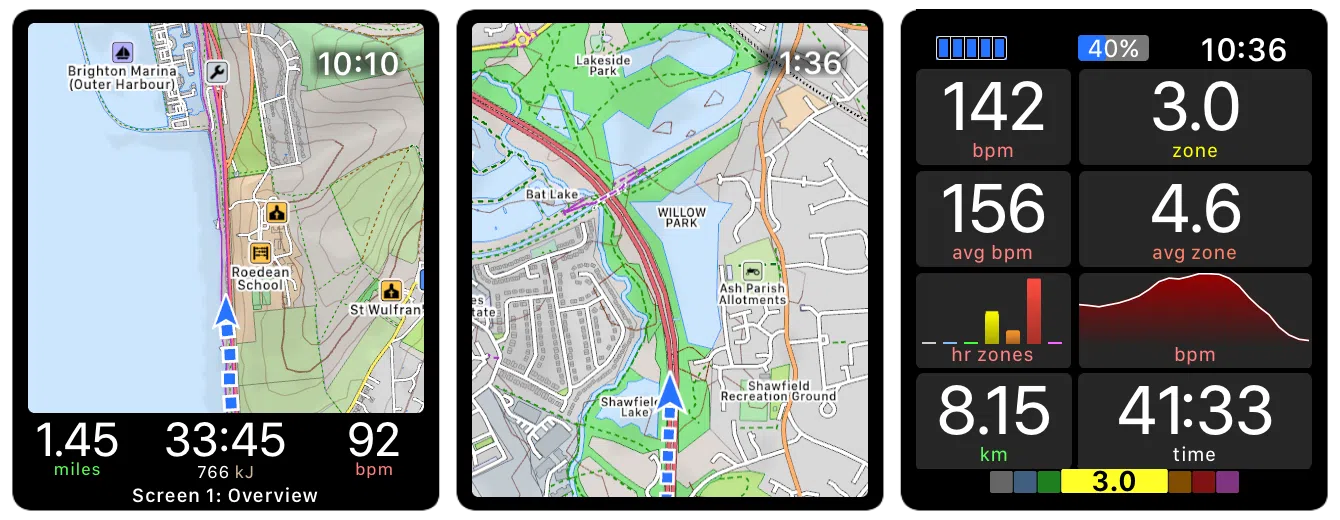
But even with WorkOutDoors fixing the software, the hardware started to bother me. First, the looks: the Apple Watch is a gadget, not a watch, and I got tired of wearing a gadget every secod person around wears. Second, it was yet another device to charge every single night. Third, sleep. I would have loved to use it for sleep tracking, but I never managed to sleep comfortably with that huge slab on my wrist, and the Ultra was even worse.
And the rest of the features? Notifications, apps, Siri… I honestly never needed any of it. So eventually I said goodbye.
Part 2: Whoop on the arm, a real watch on the wrist
In June 2024 I switched to a Whoop band worn on my bicep, and put a proper mechanical watch (it’s a UK-made Farer I absolutely love) back on my wrist. For a while, this felt like the perfect setup. You lose none of the metrics, and you get to wear something beautiful on your wrist again :)
Whoop's real strength isn't the sensor, it's the way it boils everything down to three numbers: Sleep, Recovery and Strain. You wake up, look at your Recovery, and know how hard you can push today. Later they added Healthspan (essentially your biological age) and I became properly obsessed. Every day was a small fight for better scores and a lower "age". On top of that, the battery lasts about two weeks, which after years of nightly Apple Watch charging felt like magic.
But sleep detection almost never works right. More than once I got the "good morning" notification two hours after I'd actually woken up, when I was already deep into my workday.
And then there's the company itself. Whoop is, in my experience, one of the greediest companies in consumer tech: an aggressive subscription model where you never really own anything, and an AI-first customer service that solves approximately nothing.
In 2026, I honestly wouldn't recommend Whoop to almost anyone. There are now plenty of good, cheaper devices that do the same job at least as well — both regular sports watches and screenless bands in the same spirit, like the Garmin Cirqa or the Fitbit Air, neither of which forces you into a subscription.
Part 3: COROS Pace 4, and an app of my own
Where I've landed is the COROS Pace 4. I bought it in Copenhagen right before a half marathon, when it suddenly hit me that racing with a screen and proper pacing on my wrist would beat pulling my phone out every few kilometres while running with Whoop.
And oh my, is it good:
Zero non-fitness clutter. It's a training tool, not a phone on your wrist.
Great sleep tracking. It's light enough that I actually wear it to bed, and it gets my sleep right. And somehow it manages to detect that I woke up 2 minutes after I did — feels kinda magical, to be honest.
Cheap. A fraction of an Apple Watch Ultra, and no subscription.
Super light. You really do forget it's on your wrist.
Long battery life. About a week in my case, with daily training.
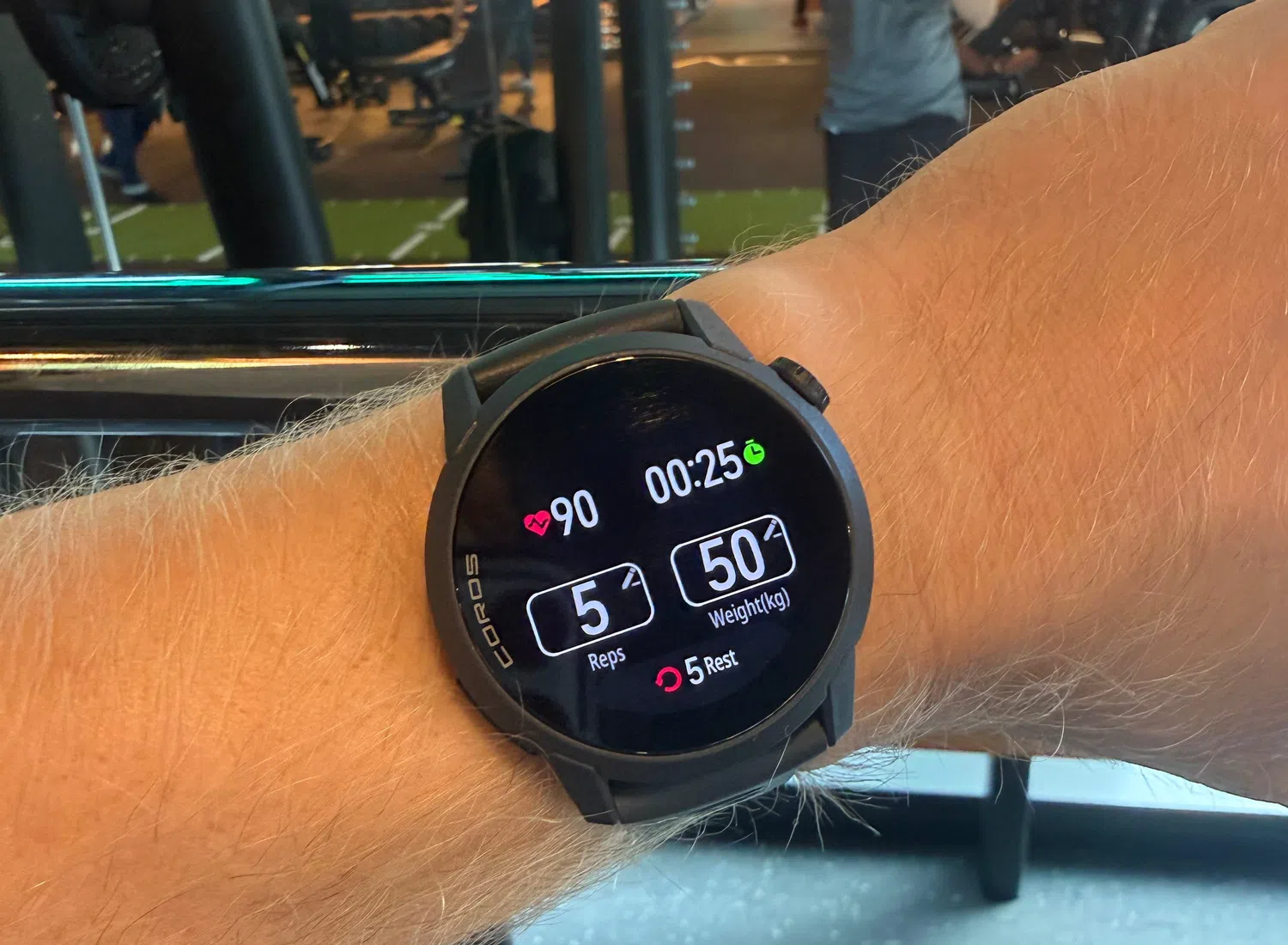
It even counts reps. In the gym it tracks weightlifting sets and reps surprisingly well.
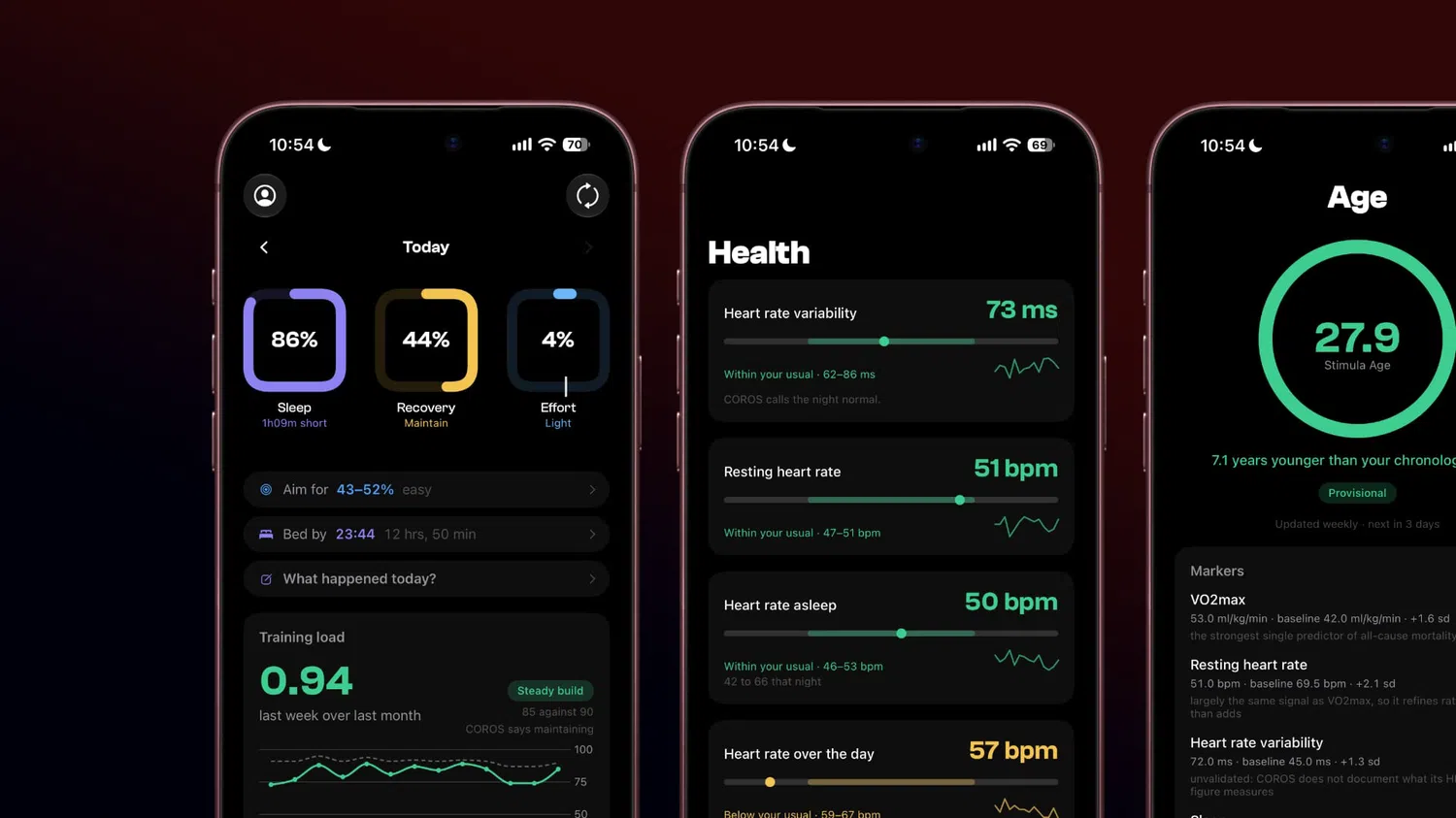
The one thing I missed from Whoop was that clean daily readout — three numbers that tell you how you slept, how recovered you are and how hard you worked. But COROS has an API. So within the first month, I used it to build exactly that: a simple interface with motivating Sleep, Recovery and Effort scores on top of my COROS data.
That side project grew into Stimula — a companion app for COROS users that pulls your activities, sleep and HRV and turns them into clear, transparent daily scores. With explanations, without bullshit, and 100% free, with no hidden purchases and stupid gated features. It's in pre-launch right now, and I'd love for you to take a look at this little work of art and join the beta: getstimula.com
Part 4: Do you actually need any of this?
Honestly? No. You can be fit, fast and healthy without a single wearable.
Yes, people ran marathons long before Whoop scores and recovery percentages existed. A pair of shoes and some consistency will get you most of the way. In addition, most of us carry our phones with us anyway, and modern phones can do the same stuff all those fitness devices do.
But if a device helps you show up more often, sleep a bit better or pace a race more sensibly — why not? For me, the numbers turned running from something I did into something I understood. Just pick the tool that fits your life, not the one with the loudest marketing.
15/10/2026